Celanese Rainwater Treatment Tanks
Location: Bishop, TX
Owner: Celanese Chemical Corporation
After corrosion caused failure of a wire-wrapped ring beam at the Celanese Bishop Chemical Plant, all three rainwater tanks were repaired and protected with encapsulated external post-tensioning and dome joint waterproofing to restore operation and prevent future deterioration.
PROJECT DETAILS
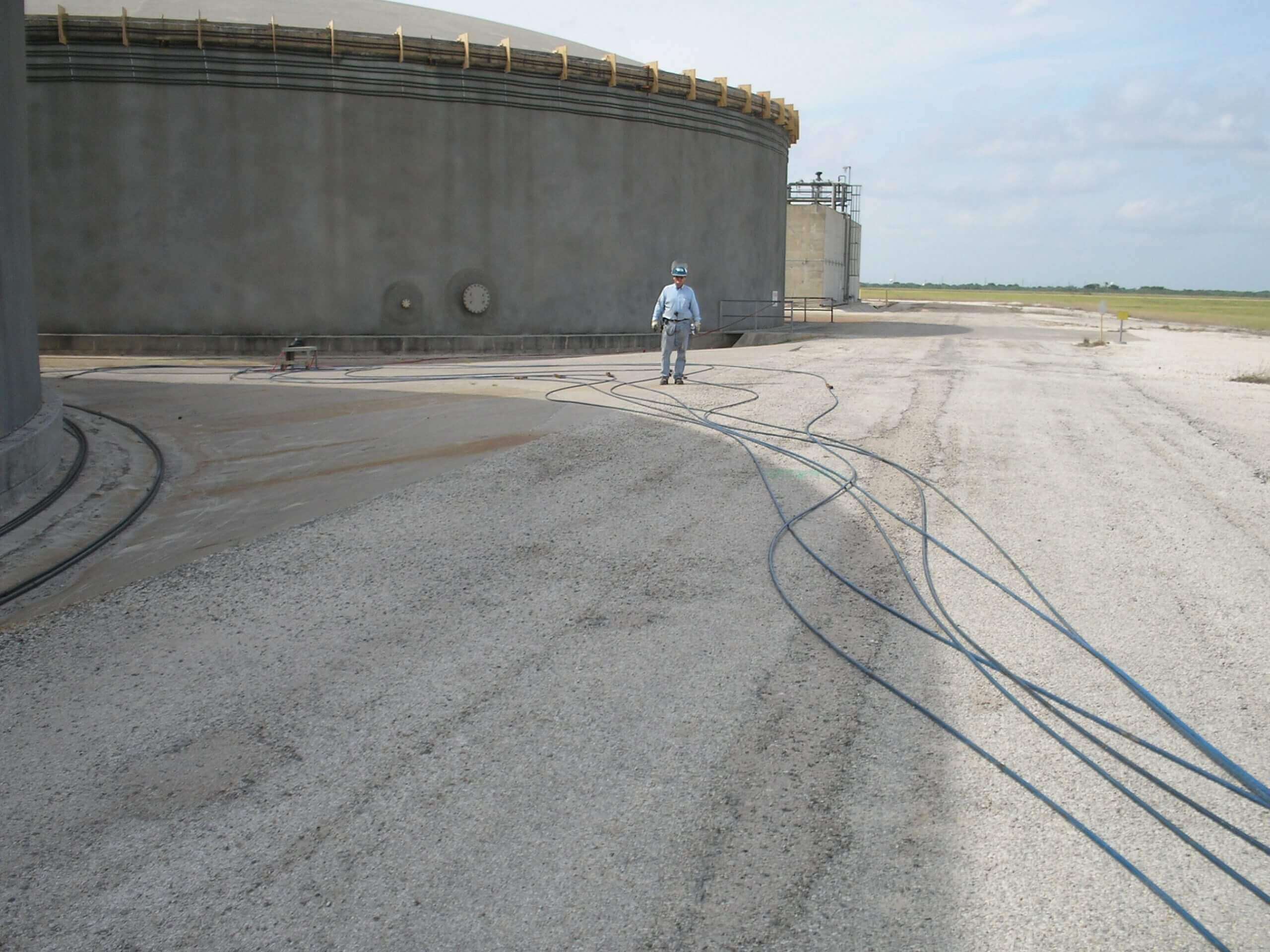
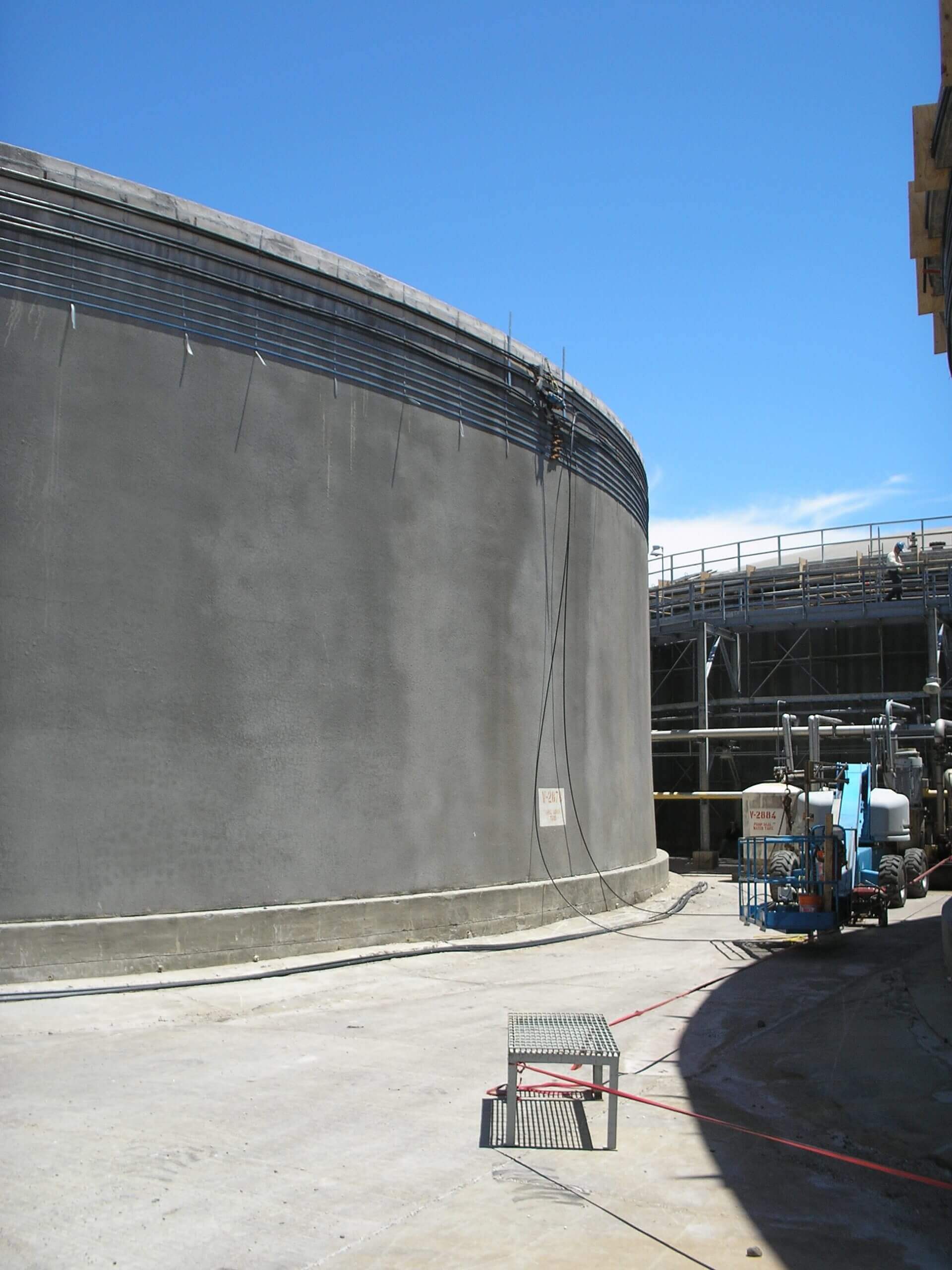
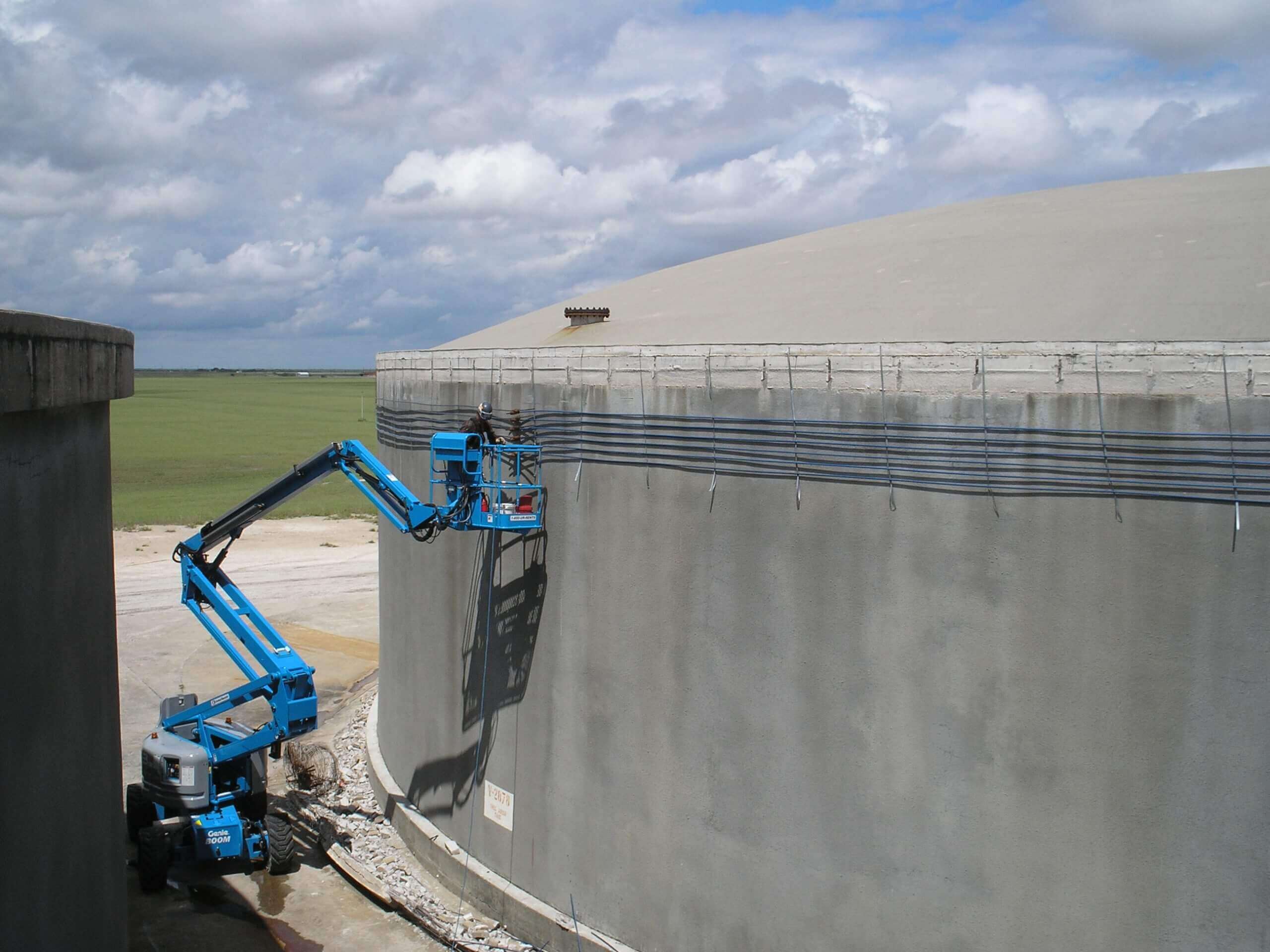
The Celanese Bishop Chemical Plant (Bishop, TX) is home to three rainwater treatment tanks – two measuring 150 feet in diameter and one measuring 122 feet. All three wire-wrapped concrete tanks were built in 1992. When a wire-wrapped ring beam corroded and failed on one of the tanks, it required repair in order for the tank to remain operational.
Tstrata refined the owner’s original concept in order to provide a long-lasting solution. The engineer determined that the root cause of the failure was due to leakage in the joint above the dome ring beam in the tank, allowing water into the concrete behind the beam. The infiltration caused the wires to corrode and upon failure, the beam fell. In order to repair the structure external post-tensioning was specified.
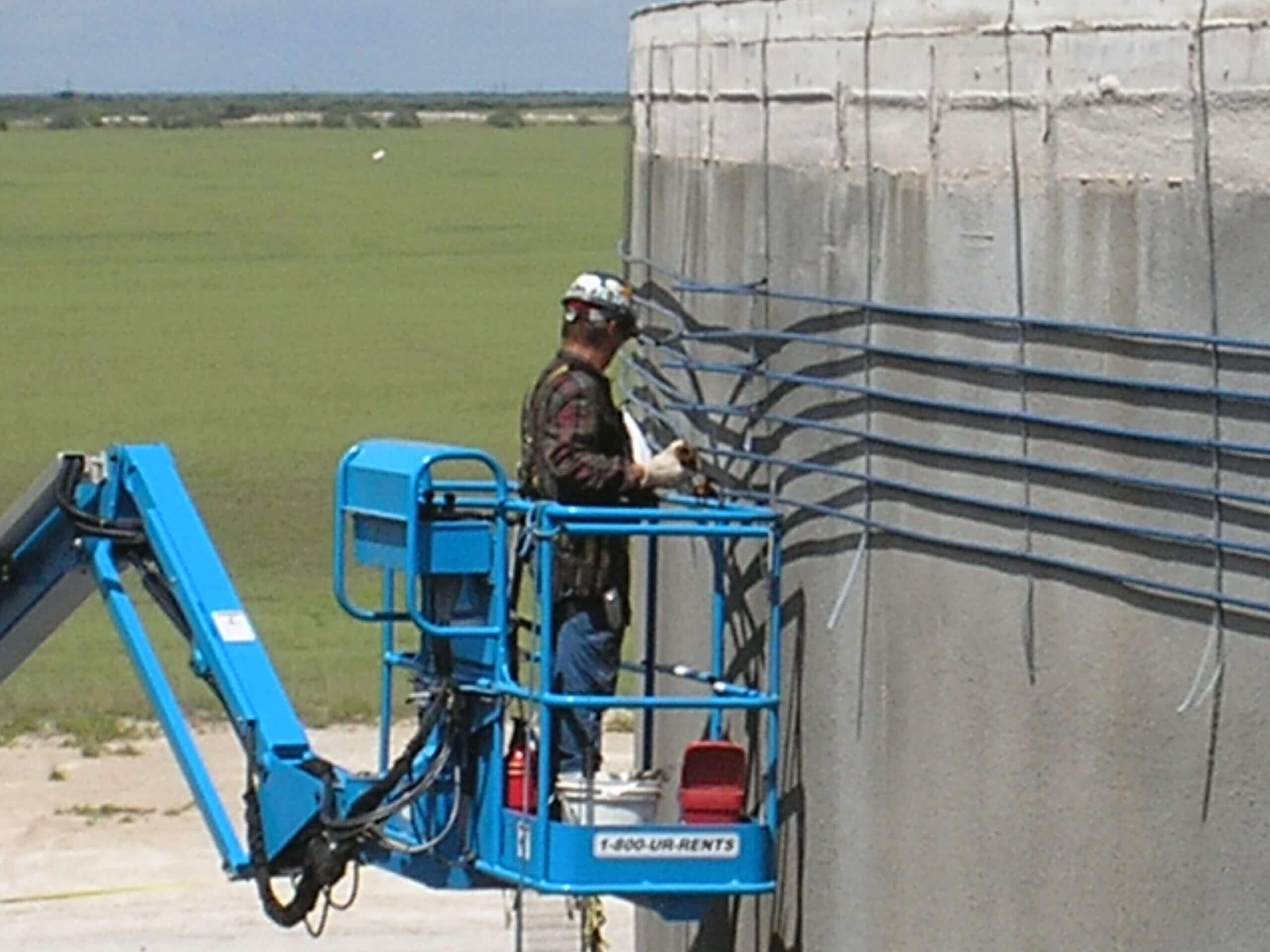
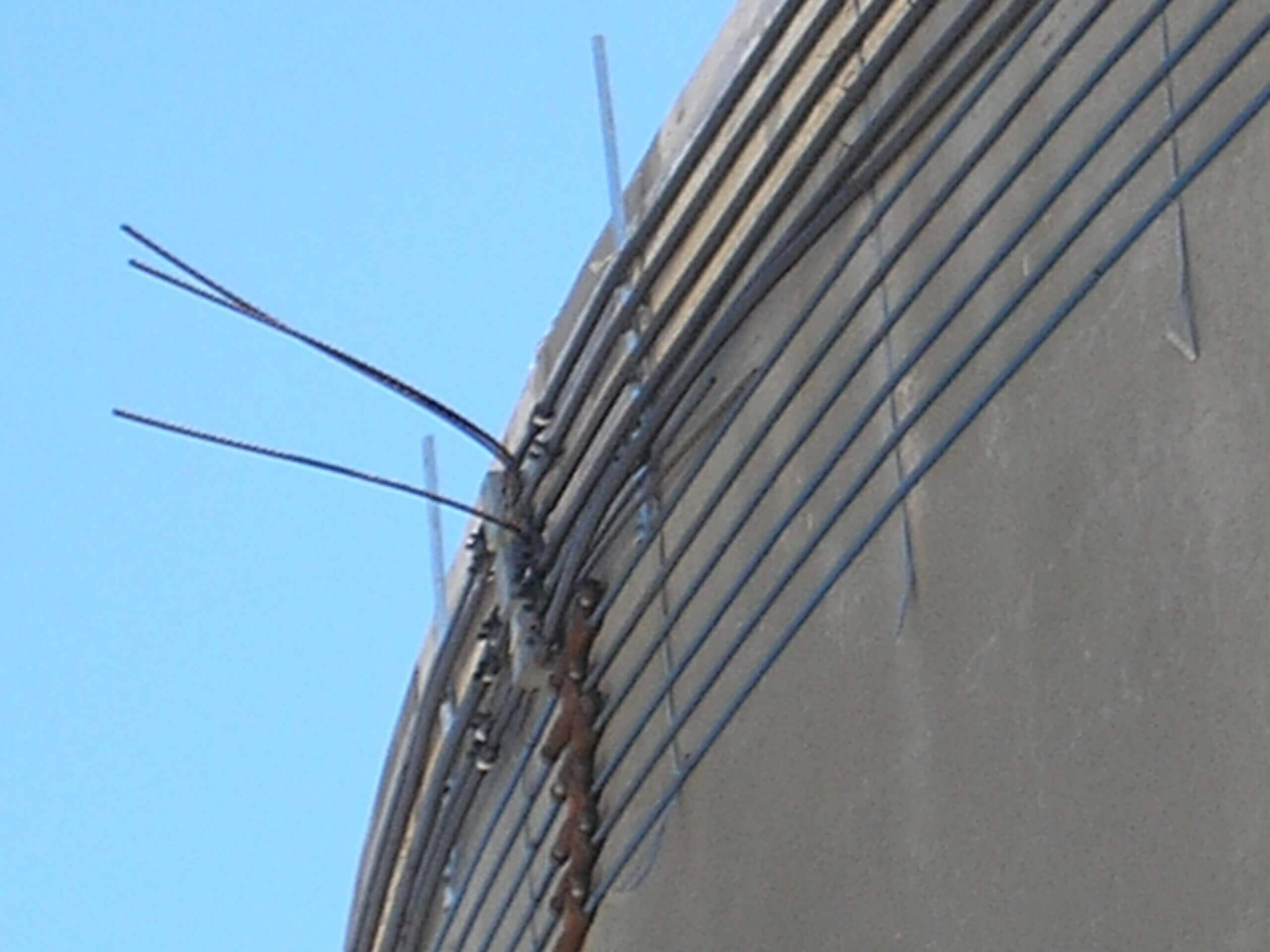
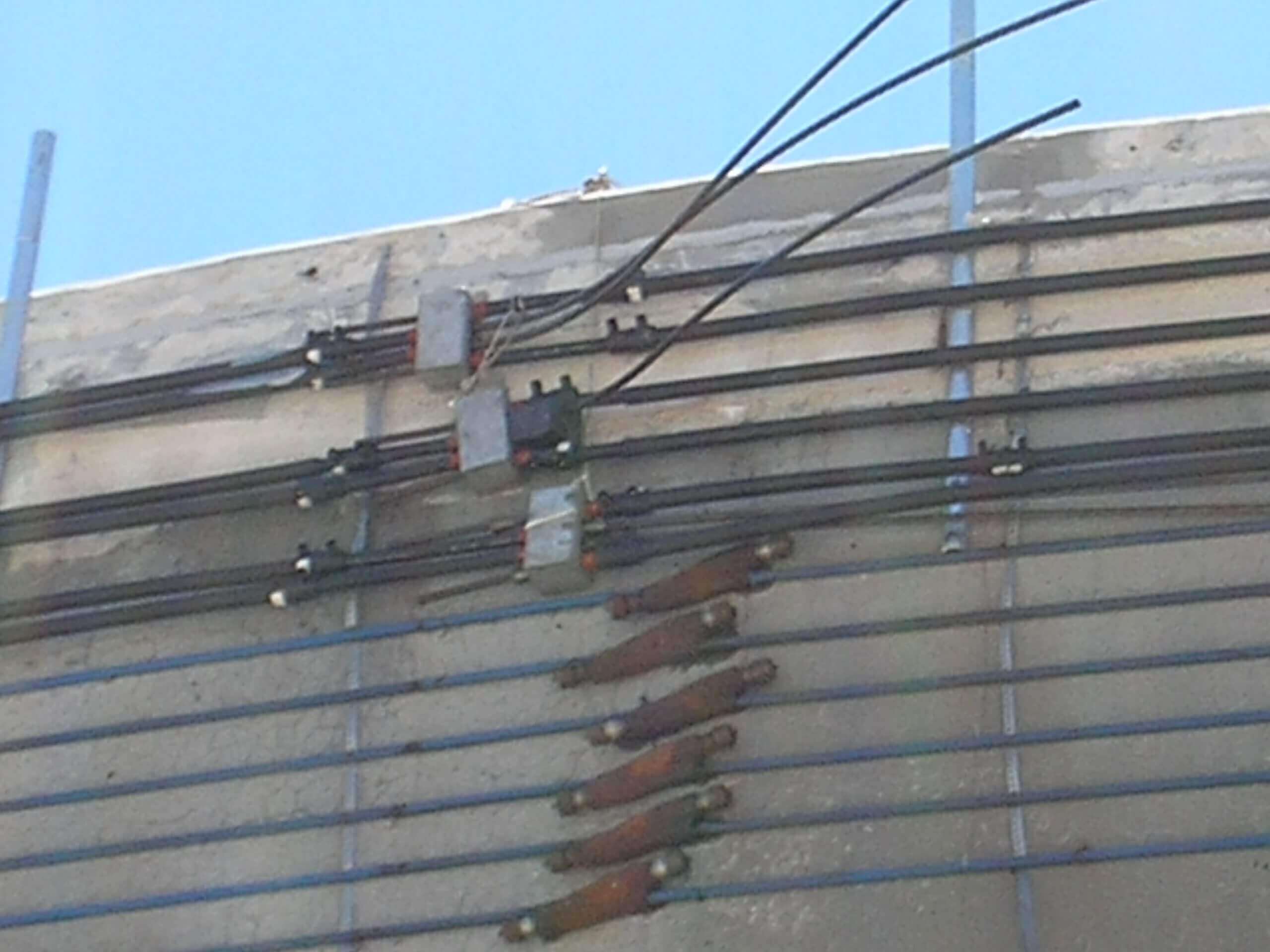
The team chose an encapsulated external post-tensioning system which passed the Post-Tensioning Institute’s (PTI) water tightness test – this included connections that were sealed against water penetration. The system, which was encased in a highly protected HDPE UV resistant pipe, was furnished and installed for the failed tank, as well as for the other two tanks as a precautionary measure.
Ten strands were installed in 360- degree hoops around each tank. The installation did present a challenge, as Tstrata could not attach the strands using any method that would penetrate the surface due to the type of tank construction. For this reason, the team devised a method of attaching the strands with straps before they were stressed and could remain unsupported, which preserved the existing wall’s integrity.
Lastly, a coating membrane was applied at the dome of each tank as a preventative measure to help prevent any further water infiltration or erosion of the ring beams. It was placed on all three domes at the joint where the dome met the vertical walls of the structure.